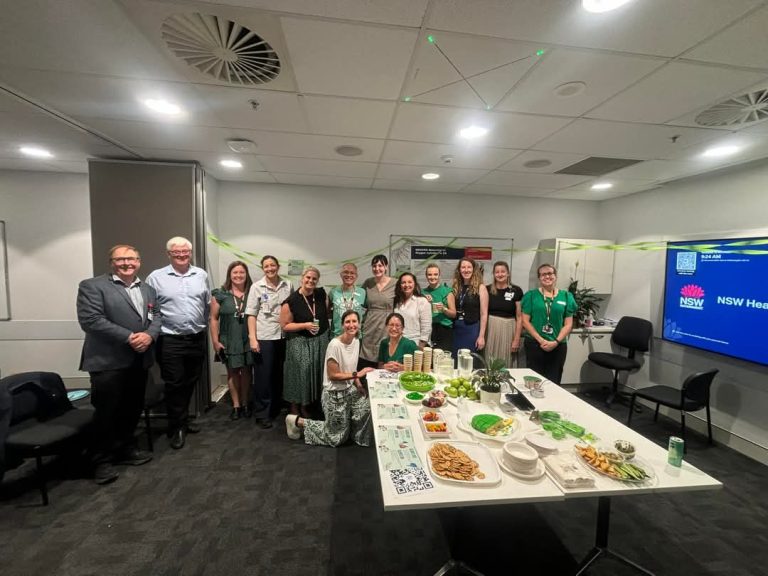
The Emergency Department at Royal North Shore Hospital in New South Wales, Australia, took part in RCEM’s GreenED International pilot programme and was one of nine sites to achieve a Bronze award.
Dr Justin Bowra was the GreenED Co-Site Lead and explains their award journey.
Why did you decide to sign up to RCEM’s GreenED programme?
It was such a great initiative that we wanted to support it and help it grow. It was also a great opportunity to be part of an Australian-first pilot programme and to help shape it for other departments in the future.
How did your department (e.g. consultant body, NUM) and/or LHD support you to take part in GreenED?
There was plenty of support and enthusiasm from the department, and we were encouraged to use our existing non-clinical time where available to devote to this project. The Northern Sydney LHD Sustainability team provided invaluable support, however the lack of protected time for ED staff was a significant barrier to data collection and implementation of projects.
What are some of the key successes you would like to showcase that your department achieved through the GreenED international pilot?
There were many successes, thanks to the contribution of so many individuals and groups. Highlights include:
- Cross-hospital collaboration with the two other EDs in the district, to form a district-wide combined ED Green Team.
- Intra-hospital collaboration with other departments eg ICU.
- Health wide collaboration with other NSW Health institutions eg NSW Pathology
- Collaboration with other NSW EDs who were also part of the project – e.g. this allowed us to fast track the implementation of the ‘Gloves Off’ initiative to reduce single-use glove use.
- Engagement with administration and procurement team to reduce paper use and increase recycling. Admissions now all performed on ipad, printers all now aligned by proximity to computers.
- Specific projects we would like to mention include:
ECOMED
Emergency/pharmacy Collaboration for optimised Medication Efficiency and Disposal = streamline medication management processes by focusing on reducing costs and minimising wastage. We removed $6500 worth of excess medications from our department, digitalise scripts for S8 prepacks, and removed medication fridges not in use.
ROCKED
This project streamlined oxygen cylinder and suction unit management in the Emergency Department by removing equipment from trauma trolleys and introducing centralised storage and suction. Oxygen cylinder use was reduced by 54%, resulting in $9,382 in savings over six months (approximately $20,000 annually) and a reduction of 1,685 kg of CO₂ emissions per year. Work health and safety risks were eliminated, saving staff approximately one hour per day previously spent checking cylinders. The project improved efficiency, safety, cost, and environmental sustainability without compromising patient care.
Are there any other benefit of shopfloor environmental sustainability projects that you would like to highlight?
As you know, it’s great to see that we can reduce our carbon footprint, reduce financial costs, improve patient care and staff morale by implementing such initiatives.
What would you say to other Emergency Medicine clinicians who are thinking about signing up to GreenED?
It’s great to collaborate as part of an international community of like-minded clinicians. To those who are considering joining this initiative:
- Seek funding and protected time from your health organisation – it can be hard to sustain this when doing this for free in your free time, and if your hospital and district say it’s a priority, they should put their money where their mouth is.
- Consider time involved and compare with other available resources. For example, your own district or health department may have relevant resources available or key individuals that could support specific projects