In our latest interview, Dr Herrieven shares the personal story behind Caring for Patients with Learning Disabilities, Autism, and Complex Needs in the ED, why this event matters, and what makes it so valuable for emergency care professionals.
Q: What inspired you to run a study day with RCEM?
My daughter! Amy’s 19 now (!!), is autistic and has Down syndrome, and has taught me loads over the years about being on the other side, accessing emergency healthcare as a parent and carer, and about the barriers to healthcare and resultant health inequalities faced by people with a learning disability and autistic people. She’s inspired me to try to raise awareness about these issues and so I’ve spent the past few years trying to take up as many opportunities to do this as possible. There’s SO much we, as emergency physicians, don’t get the chance to learn about and so many simple things we can do to make experiences and outcomes better for all patients, not just those who are autistic or who have a learning disability, and so I thought I’d put on a study day to pull some of these things together, along with some of the fab speakers I’ve come across over the years
Q: Who would you recommend attend your event, and why?
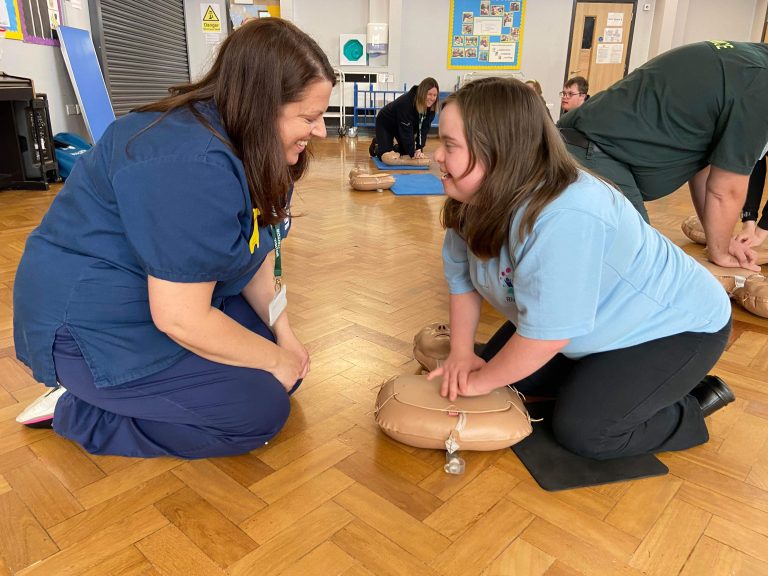
There’s something for everyone, and no other study day like it, so I’d recommend it for any doctor, nurse or AHP who works in emergency or urgent care. ED consultants with years of experience will likely learn concepts they haven’t come across before, whilst the info is accessible and relevant to all grades and levels of experience. We keep a mix of threads running throughout the day – core knowledge and legal aspects of care, patient and carer perspectives and technical tips and ideas, so whatever your previous experience of emergency medicine, learning disability or autism, you’ll learn something, hear something to make you think, and come away with ideas to improve the care you and your department deliver.
Q: What part of the event did you find most interesting or insightful?
My favourite parts of the day are those involving experts by experience, that is people with a learning disability, autistic people and their families. We are really lucky to have some amazing speakers who talk about their experiences of emergency healthcare, giving us the opportunity to learn what things are like for them and think about how we can change simple things to make our departments more accessible and welcoming, and to give our patients the best possible outcomes. Every time I listen to them, I hear something new and am reminded how important days like this are.
Q: What is your job and what does your daily role entail?
I have a few jobs…. My main job is mum to Amy and her brother Toby, which is more than a full time role, and my most rewarding job really (even with two mardy teens). My main paid role is paediatric emergency medicine consultant at Sheffield Children’s Hospital, where I work with a very lovely team. I am an educational advisor for the PGCert Medical Needs of Adults with a Learning Disability, run by RCP and Edge Hill University. I’m very proud of this one, as I was also in the first cohort of students taking this course, designed to enable clinicians to develop a subspecialty interest in learning disability medicine (as opposed to the established psychiatry branch), whatever their base specialty. The training has helped me to develop pathways for patients in my own department, as well as helping me in my other roles. I am an honorary lecturer at QMUL for the DFTB PEM MSc, which is always great fun to teach on. I am a blog editor for RCEMlearning, which helps me keep up with my CPD as well as indulging my love for writing, and I am involved with the ‘Don’t Forget The Bubbles’ team too (another fab CPD resource). I volunteer as a medical advisor for the Down’s Syndrome Association, who helped Amy, me and our family so much over the years, and I’m a steering group member for the Down Syndrome Medical Interest Group. I’ve also usually got a handful of projects on the go with other organisations too – currently NCEPOD, PERUKI and NHS England – all related to learning disability and health inequalities.
Q: What current projects are you working on at the moment?
project with PERUKI, looking at the provision available for children with additional needs in emergency departments; a study with NCEPOD into acute care for adults with a learning disability; recruitment for the next cohort of students to the PGCert Medical Needs of Adults with a Learning Disability, and also looking at routes of funding so we can continue to offer fully funded places for students; a project with a couple of non-medical collaborators looking at prevention of future deaths notices issued by coroners and how these can be used to improve healthcare, particularly for people with a learning disability and autistic people; plus I’m starting to pull together the programme for the next RCEM Caring for Patients with a Learning Disability and Autistic Patients study day, looking at previous feedback to make sure we make this the best one yet!
Q: If you could learn to do anything, what would it be?
Switch off at the end of the day!!! Or at least learn to say no to things…
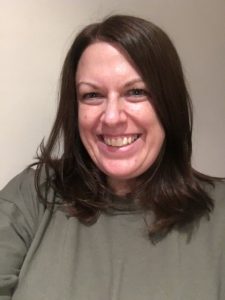
Dr Elizabeth Herrieven, Consultant in Emergency Medicine, Sheffield Children’s NHS Foundation Trust
Honorary Senior Lecturer, MSc in Paediatric Emergency Medicine, QMUL,
Educational Advisor PGCert Medical Needs of Adults with a Learning Disability RCP/Edge Hill