
RCEM responds to HSSIB report on legislative gaps affecting people in mental health crisis in ED
09/04/09 – The HSSIB has released an interim report titled mental health crisis care: legislative challenges in ED
“Crying out for help” – Dire state of A&E should be top of the Scottish Election agenda, says RCEM, as record numbers experience long waits
07/04/2026 – As thousands of patients each month in Scotland are forced to wait more than half a day in Emergency Departments before being discharged, transferred or admitted, whoever forms the next Scottish Government must make this healthcare crisis an emergency.
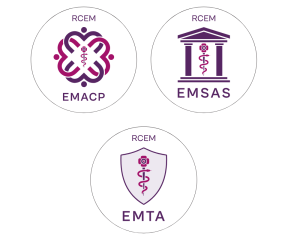
RCEM introduces new Forum logos to strengthen College identity
01/04/26 – RCEM has introduced new logos for three of the College’s member Forums, EMTA, EMSAS and EMACP, marking a step towards a more unified and consistent visual identity across the College.
Statement on Resident Doctors’ industrial action
25/03/2026 – The BMA announced Resident Doctors will strike from 7 April to 13 April.
This quarter in policy and advocacy
25/03/2026 – A round up of the first three months of 2026 for RCEM’s policy and public affairs team.
Long ED waiting times in Scotland could take generations to recover if the issue isn’t a political priority: RCEM
24/03/26 – Without a sustained political focus on reducing extreme long waits in Scotland’s Emergency Departments, it could take more than 200 years to reduce the number of people enduring these waits down to levels seen in 2016.
Nearly 1,000 deaths linked to long Emergency Department waits in Wales in 2025, RCEM warns
24/03/26 – The scale of deaths linked to long A&E waits last year should send shockwaves through the entire political system in Wales, and whoever forms the next Welsh Government must commit to ending the link between long waits and deaths by 2030.

Blog: Neurodiversity Celebration Week; best practices in the Emergency Department
The 16th – 22nd March marks Neurodiversity Celebration Week 2026, a global initiative which tackles challenging stereotypes and misconceptions around neurodiversity. This year’s theme is “Working together to create a world that understands it takes all kinds of different minds”. As well as awareness, Neurodiversity Celebration Week asks us to action structural changes to remove barriers, whilst embedding these skills within our everyday lives.
Emergency Care crisis threatens UK’s ability to withstand next pandemic, RCEM warns
19/03/2026 – Efforts to ensure the UK healthcare system is resilient against future pandemics will be undermined if the capacity issues in emergency care systems that are already ‘struggling to cope year-round’ are not addressed, according to RCEM.
EDs in Wales experience yet another record setting month for worst ever performance: RCEM
19/03/26 – As the Welsh government celebrates a record drop in elective waiting lists, RCEM has warned the ‘worst’ record setting in ED must come to an end as it’s putting vulnerable people at risk.
Increase in physical violence and discrimination against NHS staff ‘disgraceful, appalling and so much more’: RCEM
12/03/2026 – The NHSE Staff Survey for 2025 found almost one in seven staff (14.47%) experienced at least one incident of physical violence by a patient or the public last year – the highest in three years.
Not the time for complacency, RCEM says, as slight ED performance improvements overshadowed by further deterioration elsewhere
12/03/2026 – Slight improvements in some aspects of A&E performance in England must be treated with caution, the Royal College of Emergency Medicine says today.
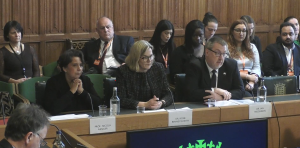
RCEM President to MPs: Corridor care is “a national issue, a national crisis and I believe a national scandal”
11/03/2026 – Dr Ian Higginson has appeared in parliament to give evidence to the Health and Social Care Committee on the state of corridor care in England.
‘Morale is non-existent’: Clinicians sound alarm over patient safety concerns in England’s Emergency Departments
11/03/2026 – More than half of Emergency Department Clinical Leads in England who responded to a survey by the Royal College of Emergency Medicine (RCEM) said their A&E was unsafe for patients.
Almost 900 excess deaths from long A&E waits in Scotland as ‘heartbreaking’ state of hospital system laid bare
07/03/2026 – Dr Fiona Hunter, RCEM Vice President for Scotland, responds to analysis from the Scottish Liberal Democrats, which suggested that there were 871 deaths in Emergency Departments (EDs) associated with a 12 or more hour wait for admission.

Blog: Boarding Medical Patients in the ED is the Key, and it’s a Fixable Problem
09/03/2026 – Nicholas Howlett, James Cameron, and Richard Wood delve into their research, published in the EMJ, on the link between longer stays in A&E and mortality rates.